01 / QUESTION
Who is recorded?
Who is left out?
Through feminist and queer perspectives, I examine how gender, race, class, and sexuality shape lived experience and historical memory.
I am an artist and a researcher in women’s, gender, and sexuality studies. I make overlooked histories visible through rigorous research and visual art.
Feminist intersectionality, past and present—made accessible to all.

Who gets remembered, and whose choices disappear from the historical record? I created Project [She] Rebel to explore how women and marginalized communities navigate and challenge power—and how their actions are represented.
Analyzing sources through feminist and queer perspectives, I ask whose voices a source preserves, whose it leaves out, and how gender, race, class, and sexuality shape both lived experience and historical memory.
HOW I DEVELOP PROJECT [SHE] REBEL
Across 28+ projects, I connect historical research, writing, and visual art to explore how women and marginalized communities navigate and challenge power.
01 / QUESTION
Through feminist and queer perspectives, I examine how gender, race, class, and sexuality shape lived experience and historical memory.
02 / METHOD
I analyze trial records, memoirs, interviews, historical and contemporary scholarship, and read against the grain to investigate alternative and resistant narratives behind mainstream facades.
My research includes Anne Hutchinson, Josephine Baker, Marsha P. Johnson, and Frances Kelsey.
03 / WORK
I add both nuance and informedness to questions through essays, poetry, documentary, painting, and sculptures/installations.
My sculpture, The King, provokes reflections regarding consumer urges and the gendered histories that have both cultured and reaffirmed our identity.
04 / PURPOSE
Through my version of a Gilded Age Boston Walking Tour, I engage people to re-examine primary evidence and construct new meaning.
Four projects connect historical inquiry with questions of gender and agency. Open a project to read its summary and explore the work.
How did Josephine Baker use celebrity and the assumptions surrounding race and gender in her wartime intelligence work?
Method: Reading memoirs and historical accounts alongside the racial and gender assumptions surrounding her career.
Read the essay → DOCUMENTARYWhat does Frances Oldham Kelsey's response to thalidomide reveal about drug safety and women's authority?
Method: An autobiography, historical newspapers, and an interview with a maternal-fetal medicine specialist.
View the process paper and film link → EXHIBITHow did African American women's wartime service connect to the struggle for equal rights?
Method: Archival photographs, testimony, and historical accounts of Black Rosies, nurses, the 6888th Battalion, and Willa Brown.
Explore the exhibit → HISTORICAL TOUR PROPOSALHow can five Boston locations bring connected histories of gender, race, and class into public conversation?
Format: A proposed self-guided tour using primary-source questions to invite comparison across women's histories.
Read the tour proposal →Literary analysis of Pearl Prynne in Nathaniel Hawthorne's The Scarlet Letter. Through close readings of her encounters with children, male authorities, and inherited wealth, I argue that Pearl exposes contradictions between Puritan ideals and the society's exclusions.
Read original text →LITERARY ANALYSISLiterary analysis of Myrtle Wilson in F. Scott Fitzgerald's The Great Gatsby. I trace the novel's descriptions of her body, shifting persona, and death to argue that her pursuit of the American dream carries a double cost: physical integrity and individual identity.
Read original text →LITERARY ANALYSISClose reading of Clare Kendry's recurring laughter in Nella Larsen's Passing. I examine how the novel links her laughter to racial passing, then question whether its emphasis on Black solidarity gives sufficient attention to Clare's isolation from herself, her husband, and her community.
Read original text →LITERARY ANALYSISLiterary analysis of Ruifang's immigration narrative in Ling Ma's Severance. I follow her movement from exhausting work to community and material success, then examine how her Alzheimer's-related behavior complicates that success through the loss of home and memory.
Read original text →How does power shape the body?
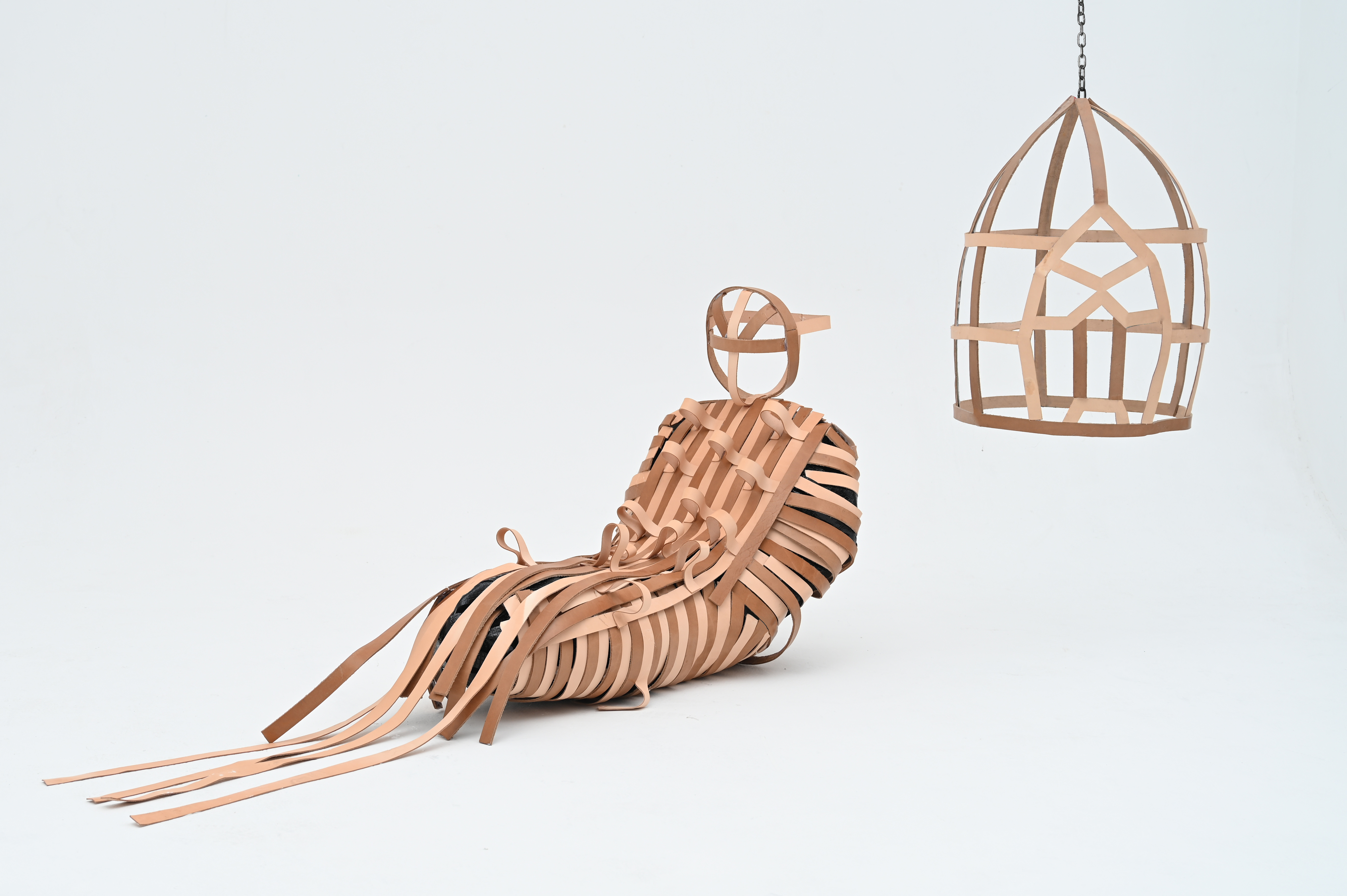
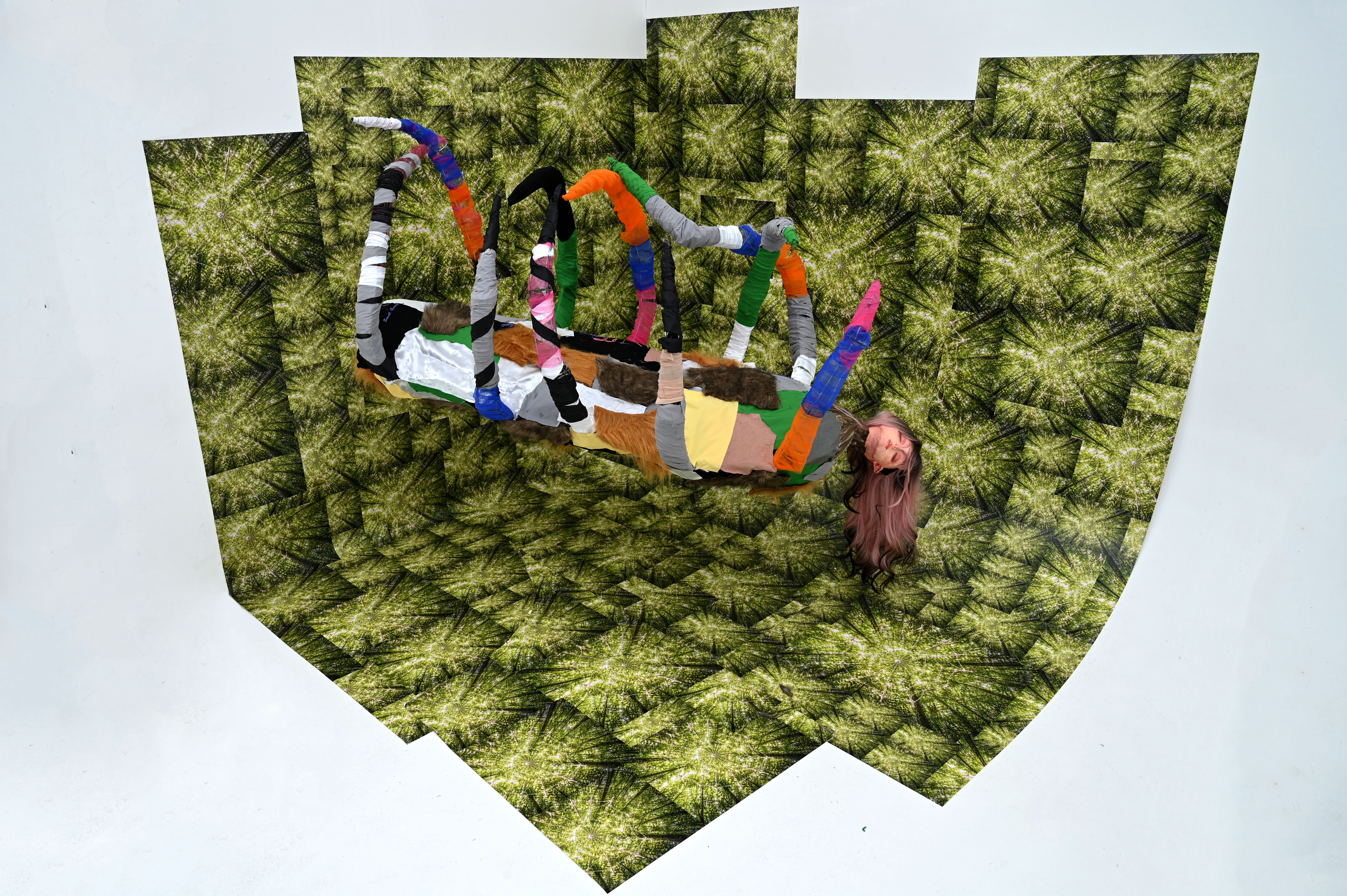
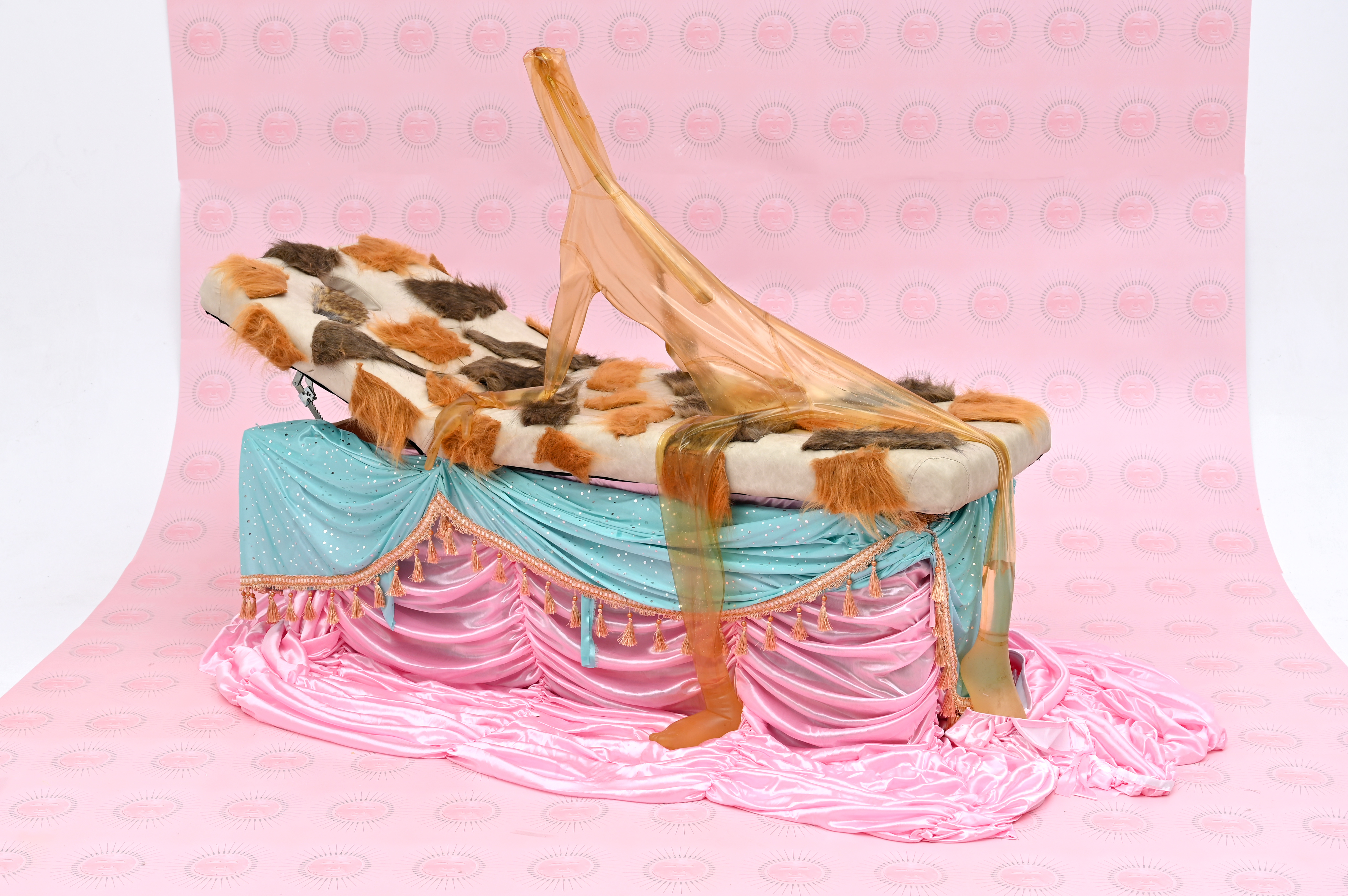
In painting, installation, and sculptural environments, I explore tenderness, rupture, and the gaze. Material and image let me pursue questions that remain unresolved in the archive.
INSTALLATION
INSTALLATION
INSTALLATION
INSTALLATION
INSTALLATION
INSTALLATION
INSTALLATION
INSTALLATION
Feathered Prisoners
History has to be shared to remain alive.
Guided 22,000+ visitors from around the world at the Salem Witch Museum.
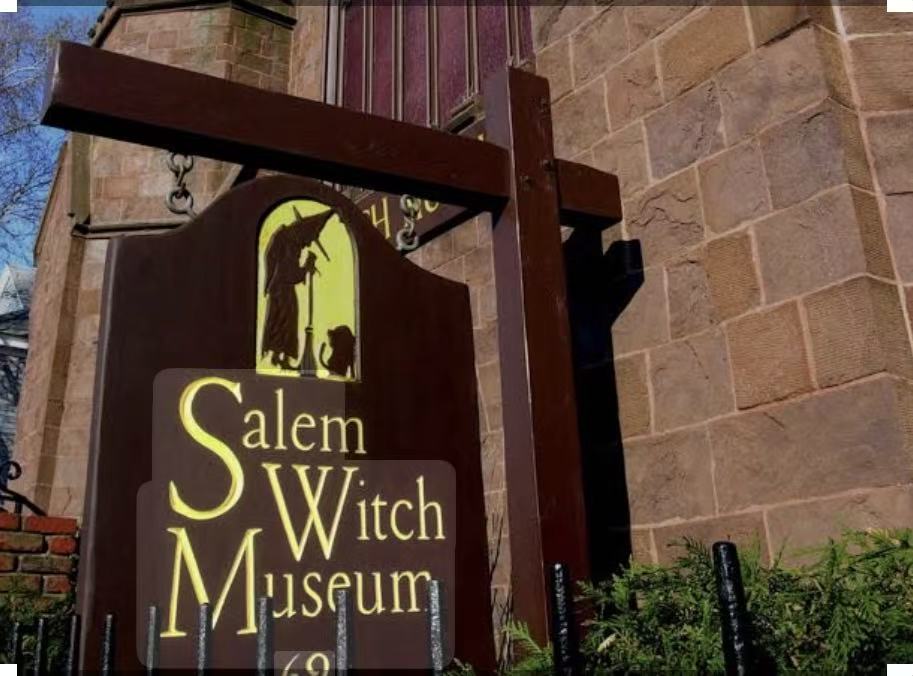
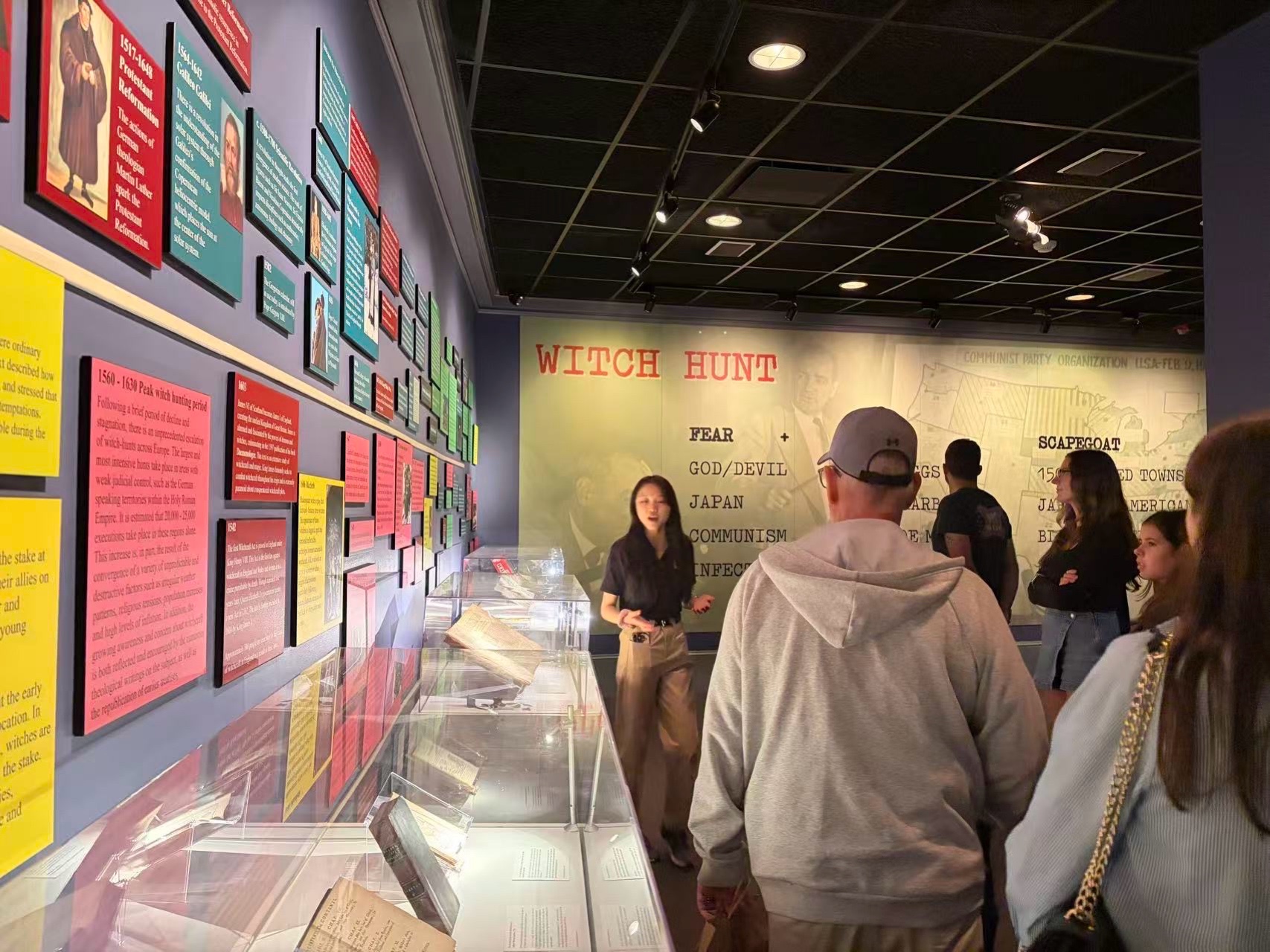
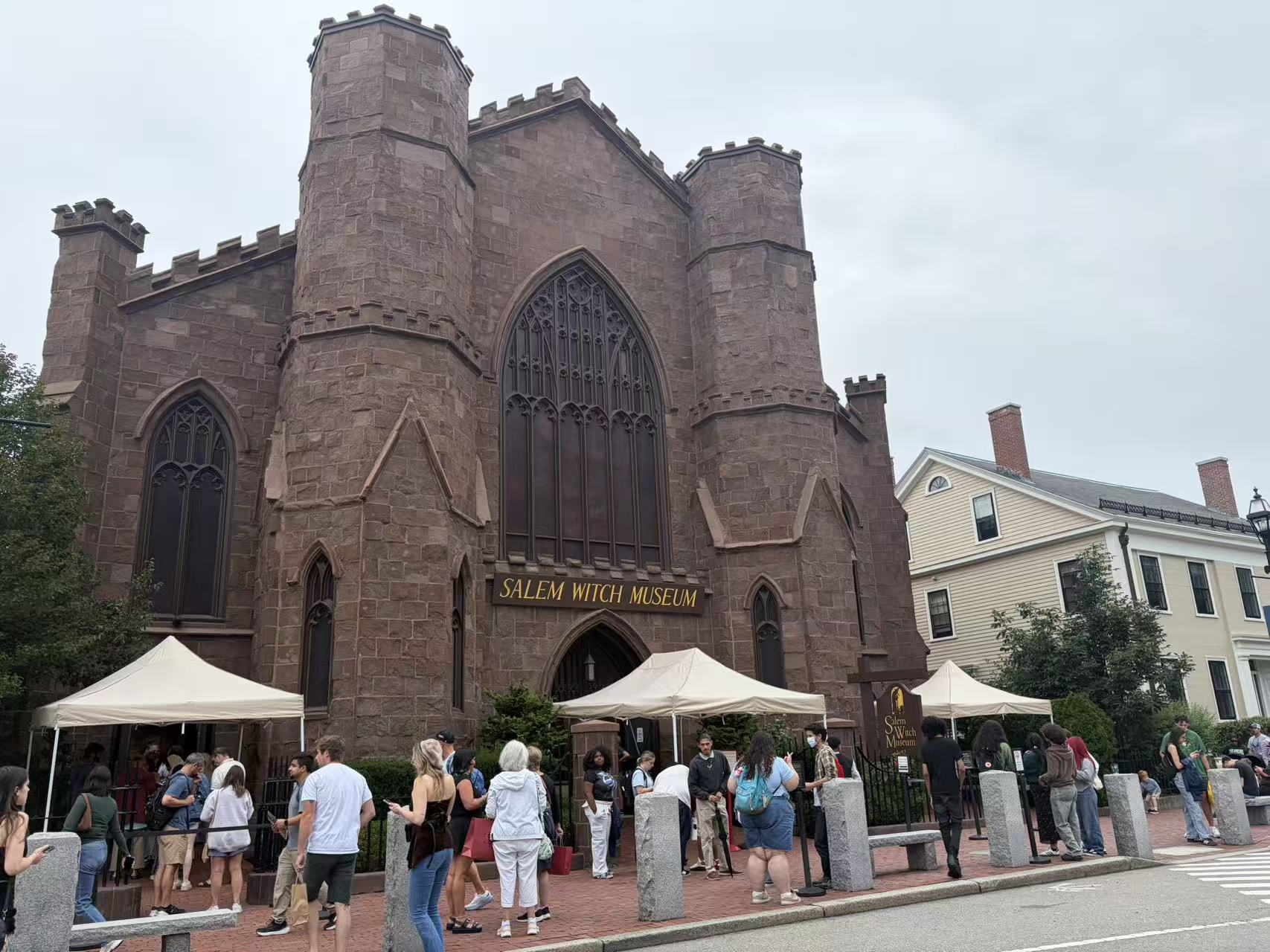
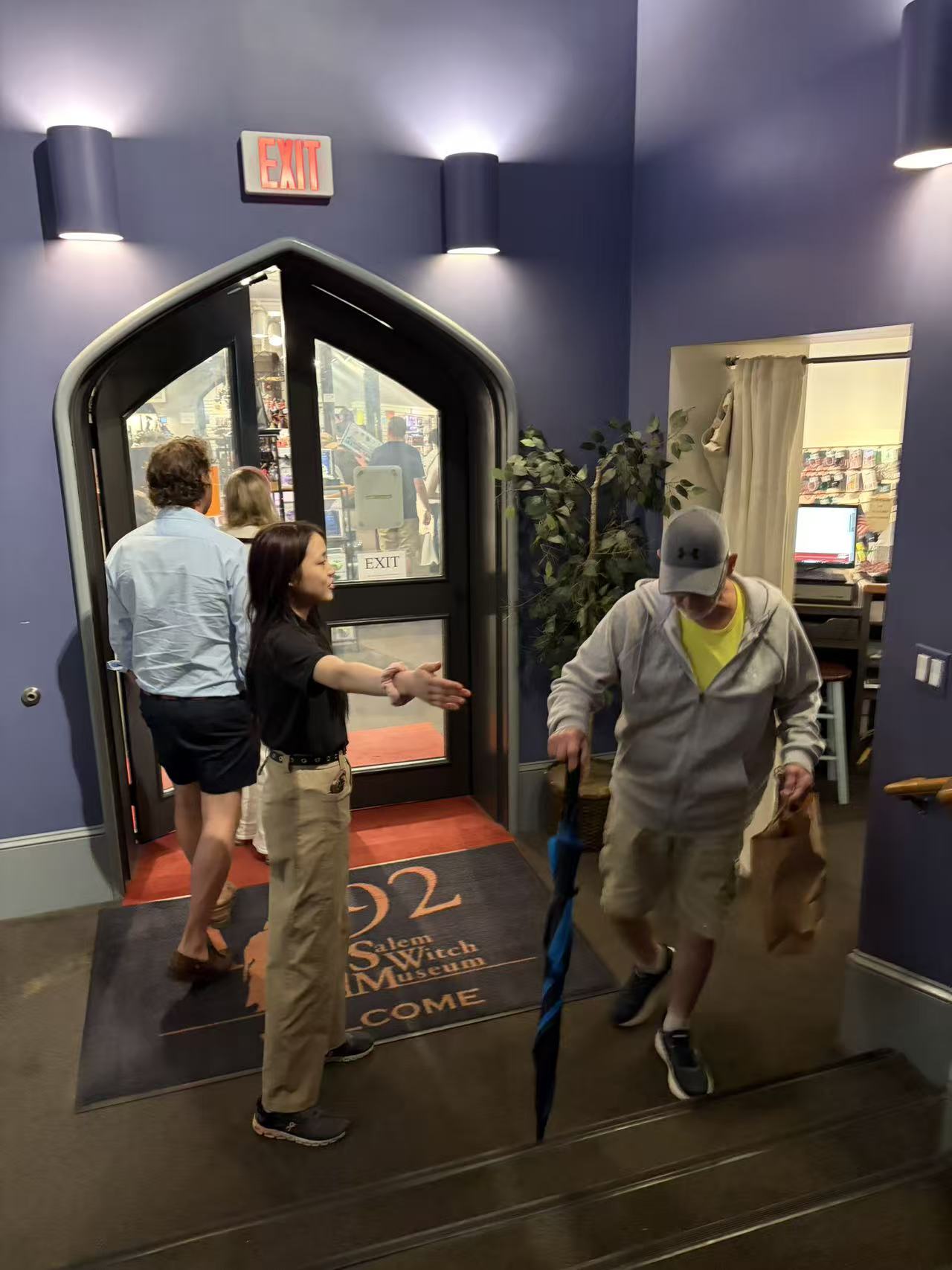
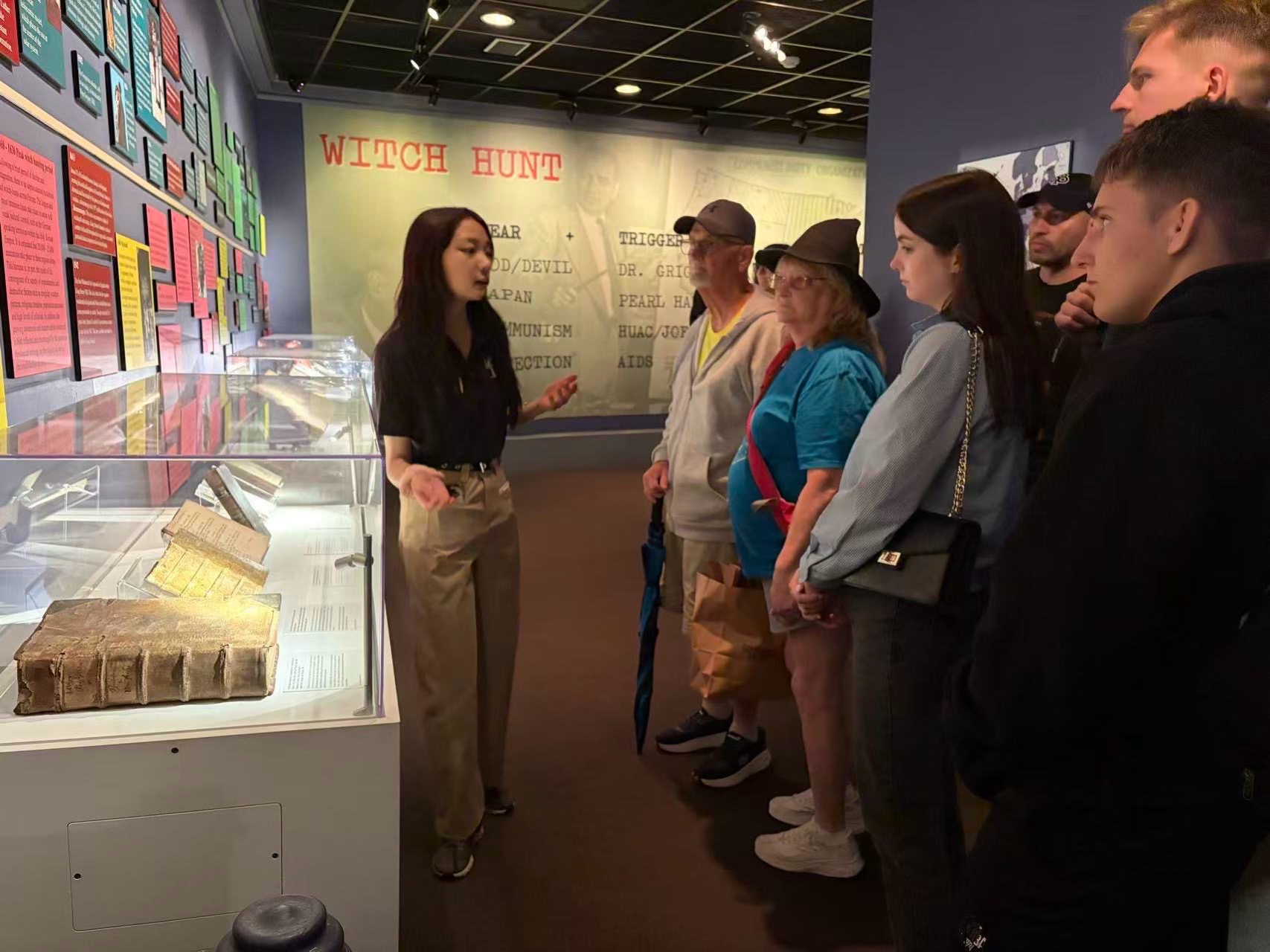
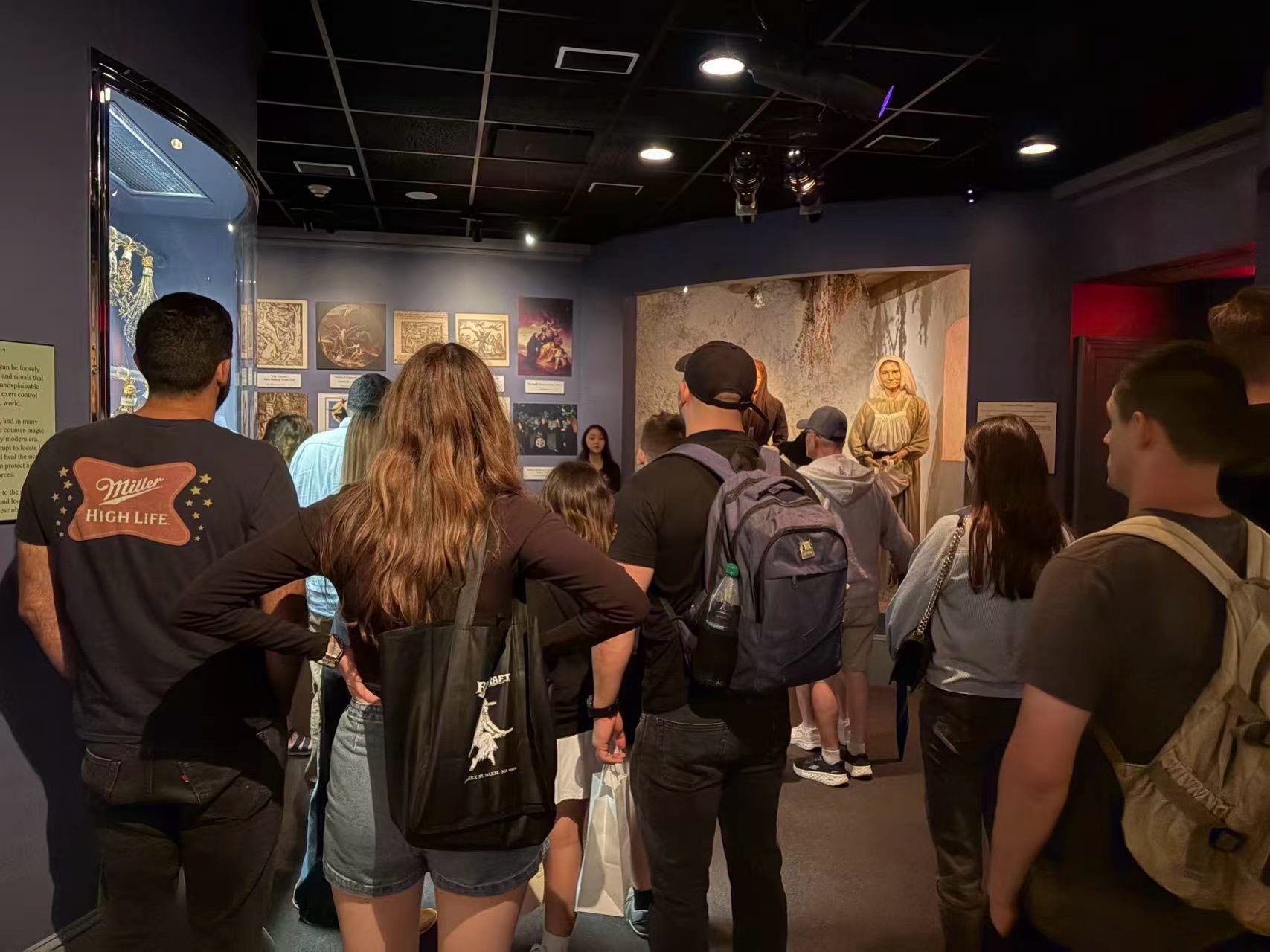
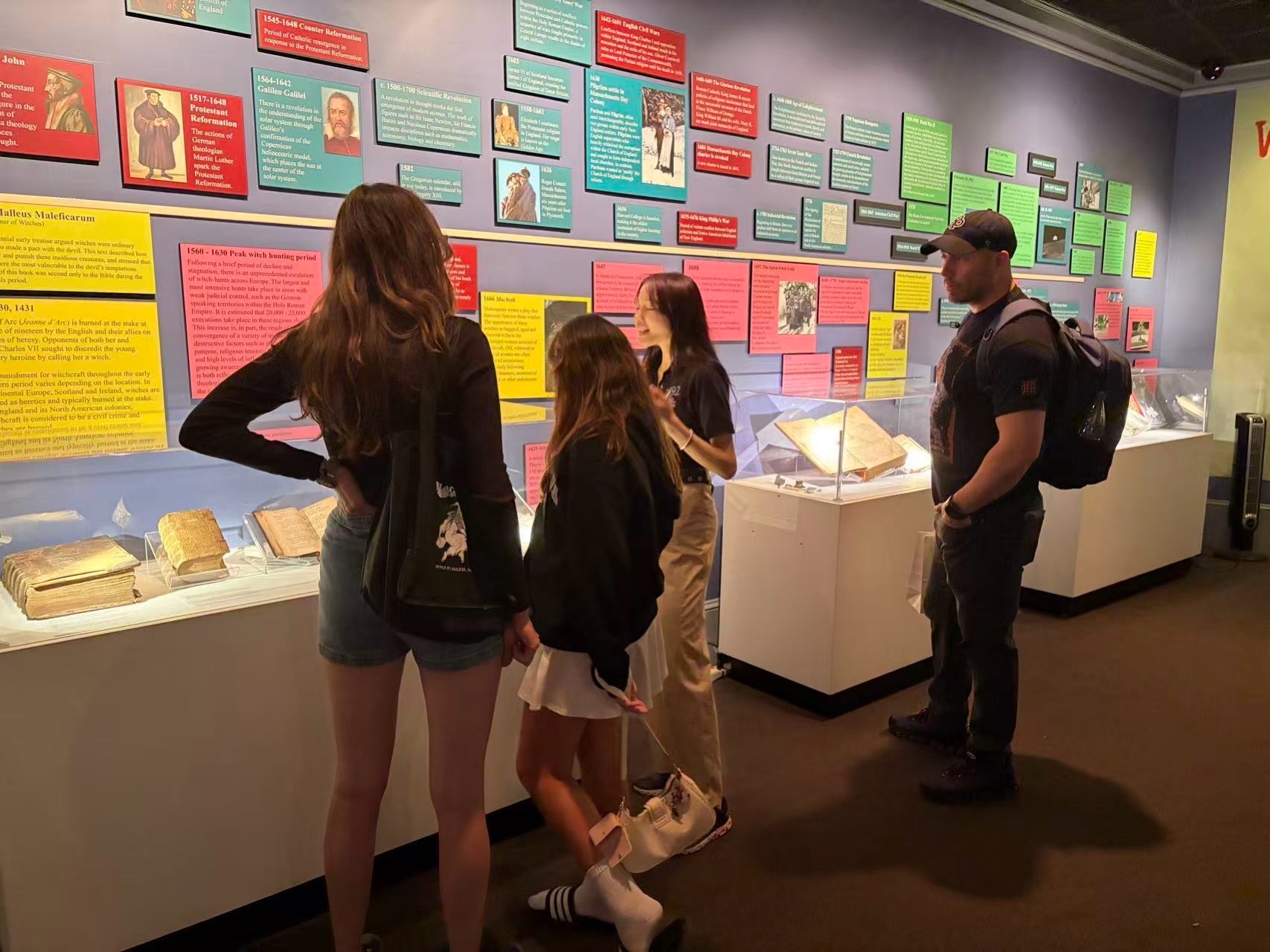
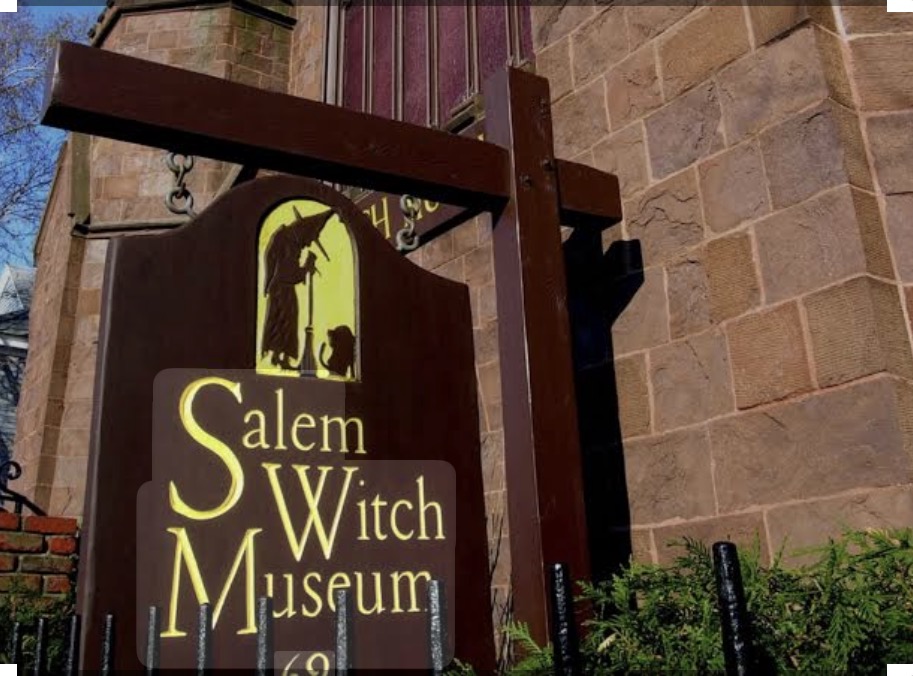
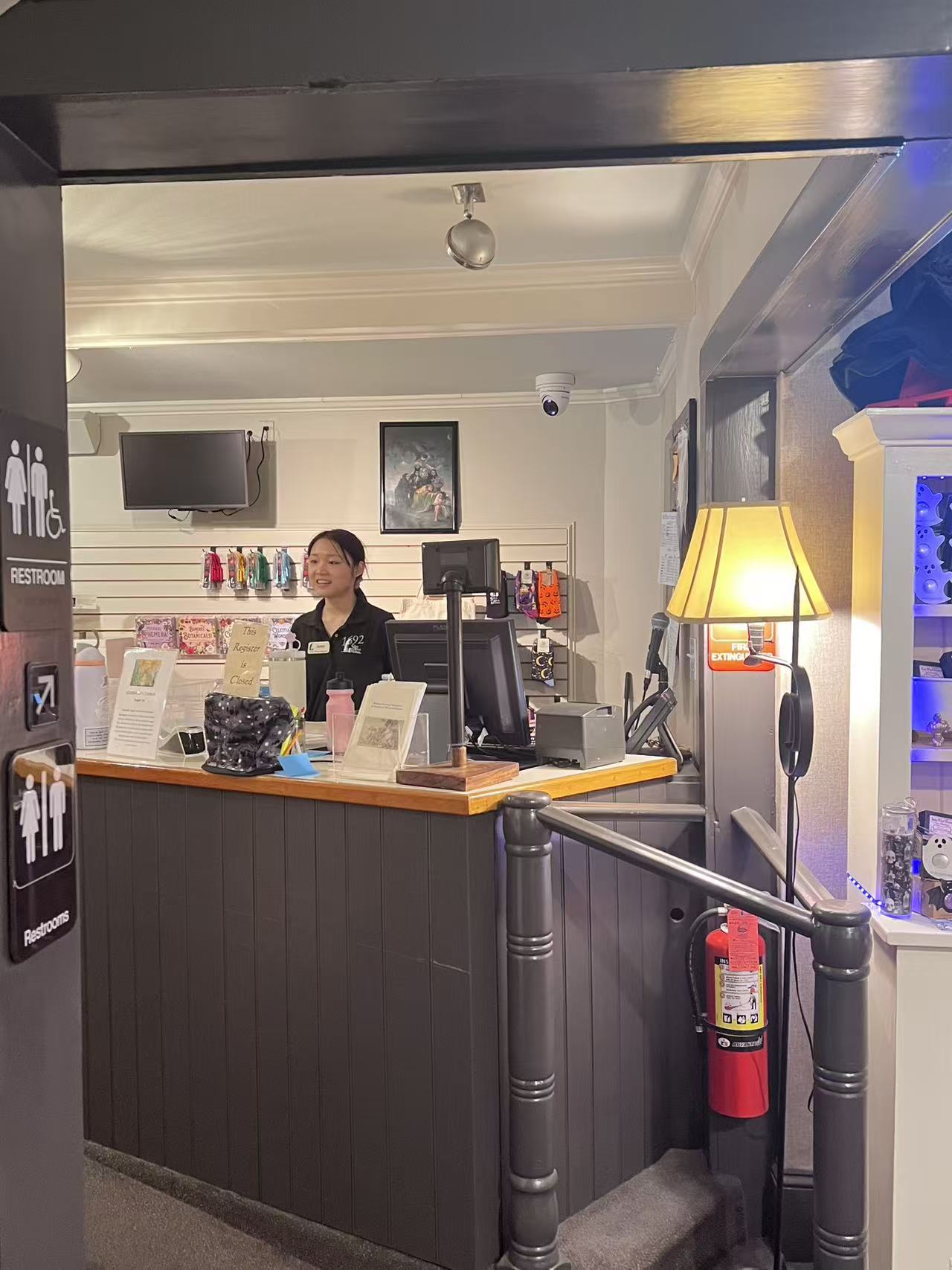
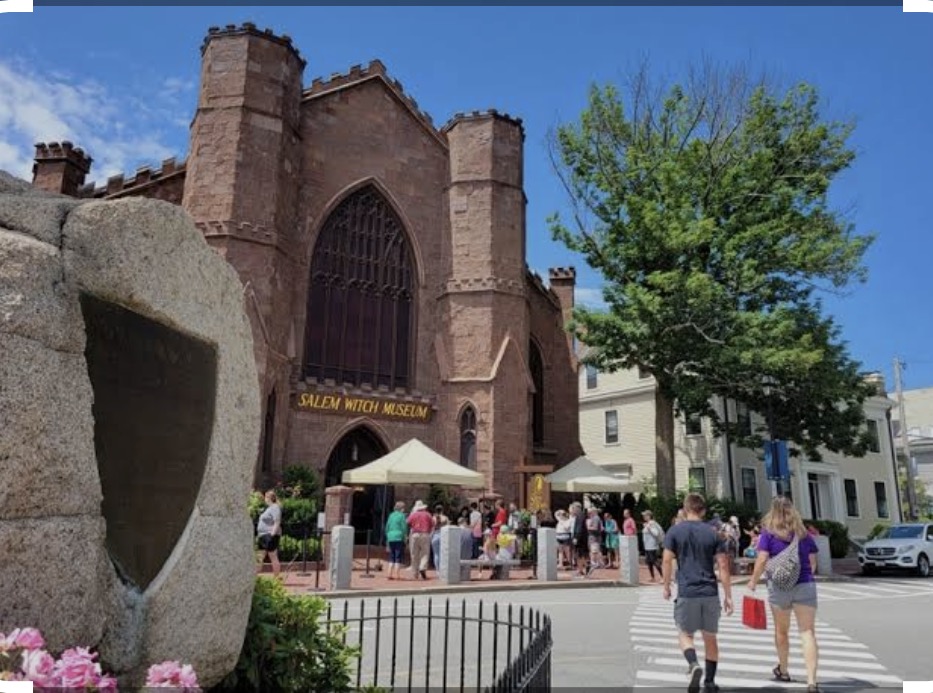
At the Salem Witch Museum, I guide visitors through the witch trials, exploring how gender, power, fear, and prejudice shape the historical memory of women.
This work brings Project [She] Rebel into public dialogue: how can we share difficult histories without perpetuating their fear and exclusion?